
Blockbusters, Ball-busters, and the Lost Art of TV Melodrama
Will the Bitch Ever Come Back?

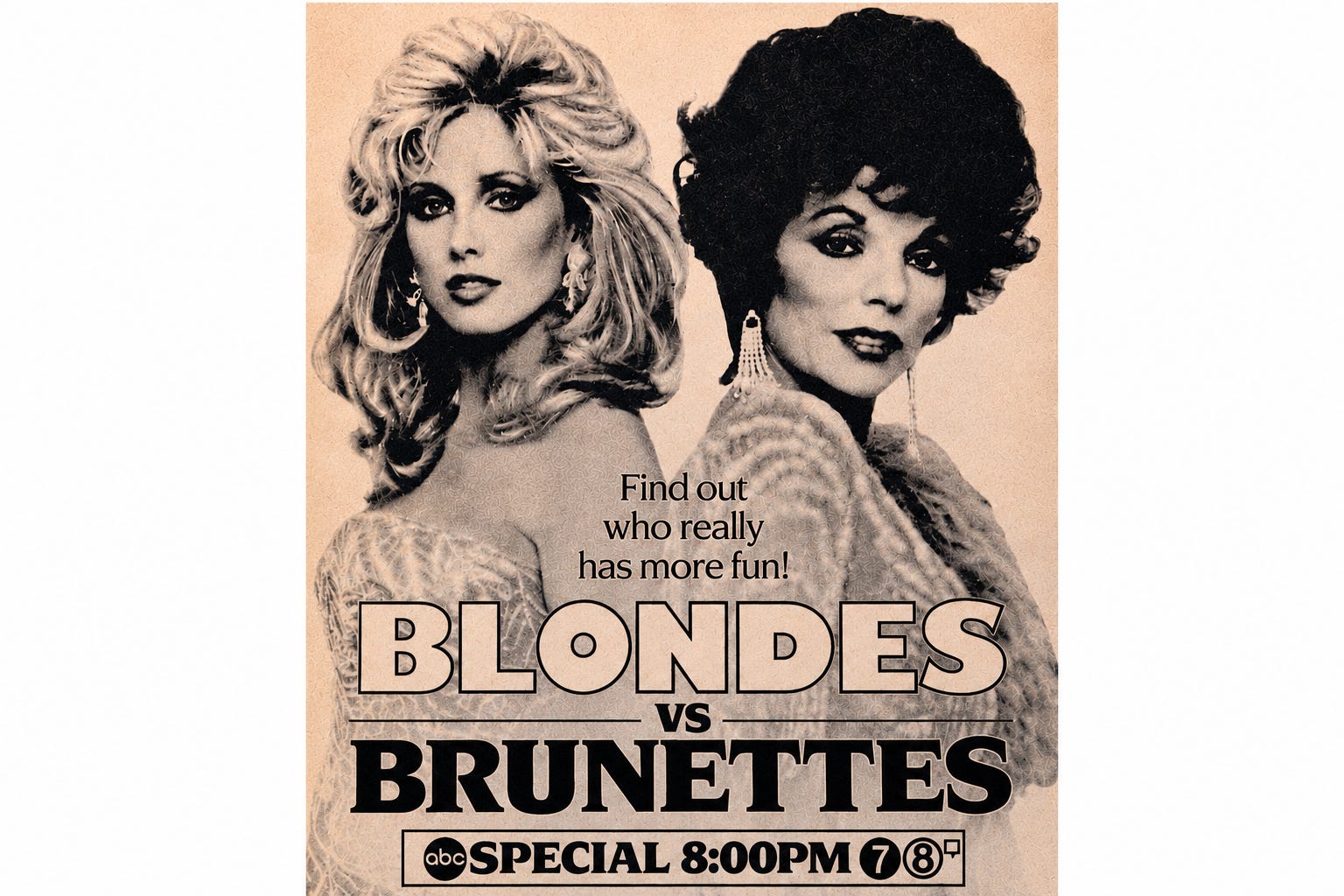
Last winter, my Instagram scroll landed on a grainy, black-and-white advertisement for a show I forgot. The image triggered such a powerful wave of nostalgia that it felt almost physical, transporting me back forty years to a time of epic, female-centric storytelling – on the page and on screen.
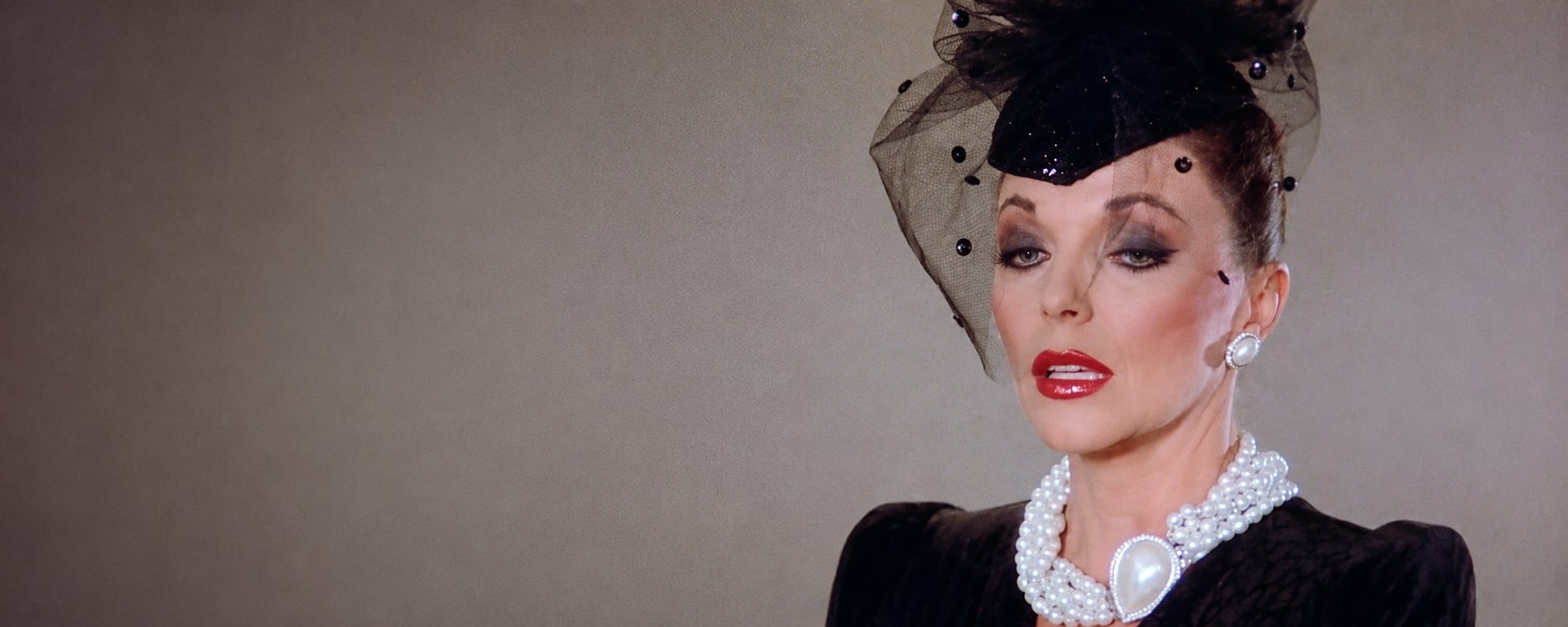
For fifteen years, 1980 – 1995, network miniseries adapted from bestselling novels dominated pop culture. These stories told us that women could be audacious, powerful, and sexy all at the same time. Without Joan Collins in all her 80s glory, we wouldn’t have Lisa Vanderpump. We wouldn’t have Cookie Lyon, Moira Rose, and maybe not even Samantha Jones. The modern-day diva was born in those shows – and on the pages of the blockbuster novels they were based on.
With divas like Jackie Collins writing the books and her sister Joan starring on television, it was a potent time for girls trying to imagine adulthood. No wonder we’ve never quite gotten over it.
But now it feels like these iconic stories are disappearing. Will we be the last generation that remembers them? Or will the melodramatic seeds they planted decades ago somehow live on?
I knew if anyone had the answer to these questions, it would be the creator of that TV Guide post on Instagram . Scott Humphries is a self-described “aficionado” of 1980s melodrama, but I think that’s understating it. He holds degrees in literature and urban planning, but after reading his book The Age of Melodramatic Miniseries: When Glamour Ruled On Television, I’d add PhD in Melodrama.
Unfortunately, my new like-minded, soap-savvy friend lives far away — Australia far. But we’ve starting regularly chatting on Zoom.

One of the first things I told Scott was that I’m so thankful he wrote THE AGE OF MELODRAMATIC MINISERIES.
“It seems like most cultural historians ignore these productions,” I said.
He told me, “There was a really good book written about ten years before my own, but it only included a few pages about this type of female-driven melodrama production and viewed them more as a subgenre of camp. But I thought these miniseries do form a genre of their own. I could see a throughline, and no one else had talked about it before.”
Let’s talk about the word “trashy” because that’s been lobbed at both the miniseries and the novels they were adapted from.
It was certainly intended as a negative by critics in the 1980s as something that has no cultural value, but audiences embraced it as a kind of code for escapist, glamorous melodrama.
The audiences were ahead of the critics: we know it’s not the same as a realistic drama, but both forms can exist and be appreciated for what they are. Now even critics understand that “trashy” or “guilty pleasure” viewing has its own set of codes and tropes, and that’s how we should evaluate these types of programs.
One of my favorite parts of your Instagram content is the clips you share from TV Guide.
The artwork was brilliant marketing but so were the catchphrases, like one that got used a lot, but is mostly associated with Lace: Where innocence ends, her story begins.
Let’s clarify something before we go too deep: Is there a difference between the classic 1980s “mini-series” and what they today call a “limited” series?
The first time I heard the term “limited series” was about 2012. I think they tossed out 11miniseries when they decided it sounded too old-fashioned. They’re the same thing. It’s a short form drama with a predetermined endpoint. Well, one difference between the two is that classic miniseries did end the story. (Often killing off a whole bunch of people in the process.) But today, even with the limited series, often the first one, like the White Lotus, is advertised as a limited series, and then it is very popular and suddenly becomes an anthology series.
So today it’s almost like they’re floating a story to see if it gets traction with the audience, and then they renew for season two. They’re reactive in their storytelling.
Exactly. Whereas I think there is a real benefit, creatively, to telling a finite story that has an actual end.
Still, it was such an unlikely marriage: network television and sexually explicit novels.
Yeah, it was a very uncomfortable marriage because the networks wanted a big book. They wanted a miniseries, but they also didn’t want to show any kind of sex. They didn’t really want to show very strong women. There are so many examples of them paring back and toning down women who were, not evil, but just forthright. They made them calmer and much less sexual.
These were supposedly women’s stories, but you had male producers, male directors, and probably male censors. A lot of what they were trying to do was make the heroine “sympathetic.” Well, if the character is supposedly this ball-breaking bitch, and then you tone it down, is she the same character? The TV writers had to fight against the network to get the essence of the books onto the screen.
Did these miniseries do a disservice to the books?
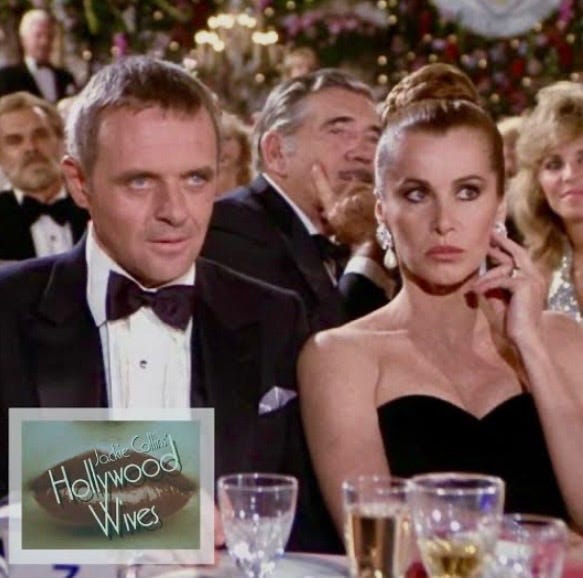
A couple, yeah, yeah. Like Hollywood Wives. I don’t think it’s in any way it’s a good adaptation of that book.
How did viewership of the 1980s miniseries compare with today’s streaming audiences?
Well, it’s hard to compare because we had the ratings figures in the 80s, so we know that literally tens of millions of people were watching these miniseries. I don’t really know what today’s streaming ones are because they talk about how many downloads they have after three days. But remember, it’s not just that millions of people watched these shows. It’s that they had to sit down over three scheduled nights and all watch it at the same time.
Any casting surprises in these shows?
I think the one most people would be surprised by is Anthony Hopkins in Hollywood Wives. But he really goes for it!
These epic stories were so popular and yet, as a novelist, I can tell you A Woman of Substance would never be published today. Or if it was, 60% would be trimmed.
Yeah, a lot of assumptions seem to be being made about the attention spans of readers or viewers -- but they’re not offered anything else. And people are still going back and reading these books.
What do you consider better storytelling – the shows then or now?
It’s tough question because television audience tastes and TV trends have changed so much. And if you look not just at miniseries, but if you look at soap operas from that time, that sort of slow burn storytelling, that pacing, people wouldn’t accept it today. But that’s why they were so addictive!
What do contemporary writers get wrong about melodrama?
Melodrama needs to have emotional sincerity at its heart. And maybe that’s what’s missing today.
It takes more than just a few cat fights or hot young people taking off their clothes. There has to be something at the center of it that we connect to emotionally, and that’s why I think Lace is so good. While it is so over the top, you cannot help but be moved in that last scene where she is reunited with the mother.
If you had to recommend one of these miniseries to someone who’s never seen any of them, which one would it be?
One I recommend to people is Lace. Even if you think the story is ridiculous, it’s beautifully filmed. I also really like Deceptions -- the one with Stephanie Powers playing twins. But the one I would probably recommend, if you want to get a real sense of 80s over-the-top glamour, is Sins with Joan Collins. It epitomizes 80s melodrama.
Will we ever see a revival of this sort of extravagant storytelling?
I think of these shows as a kind of stardust: we’ll probably never see a convergence of all the pre-conditions that made these particular shows so special. They really are an artifact of their time and place.
But I do believe our fascination with melodrama, glamour, and serialized storytelling will always remain. We see glimmers of it with recent shows like Rivals (although a big part of the appeal of that one seems to be nostalgia for the 1980s period). So there is always hope.
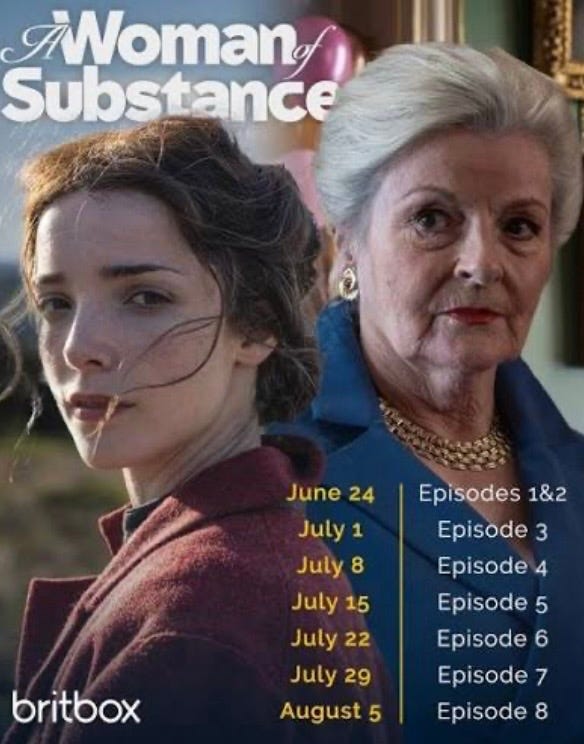
I agree with Scott. There is hope. For one, we have a brand-new remake of the 1984 mini-series A Woman of Substance (adapted from the bestselling 1979 novel by Barbara Taylor Bradford) streaming on BritBox. Scott and I are going to watch it together and compare notes!
In the meantime, if you haven’t read my burlesque romance BLUE ANGEL, now’s the perfect time to start. Book Two of the series, FALLEN ANGEL, publishes on August 11. And if there’s a diva in your life who speaks our language, please share!
XO
Jamie
Love this conversation!
Those movies were so over-the-top in the best way. Add in Dynasty, Dallas, Knots Landing, Falcon Crest, etc... and they were the epitome of 80s glam.